

How To Use Cash Register Fast Food Restaurant
All living organisms in the world tin be classified every bit either an autotroph or heterotroph. An autotroph is an organism that can brand its own food for energy. A heterotroph is not capable of making its own food. They depend on other organisms to provide them with the energy needed to survive.
Organisms that are classified as beingness decomposers, consumers, and detritivores are all categorized as being heterotrophs. These groups consist of all animals, fungi species, and some types of bacteria that be throughout the world. Heterotrophs brand upward the second and tertiary levels of the nutrient chain.
Decomposers
Decomposers are organisms plant at the end of the nutrient chain. They are responsible for returning the nutrients offered from expressionless organisms dorsum into the soil, which is used past autotrophs for their photosynthesis cycles. These nutrients consist of phosphorus, nitrogen, and carbon. Near decomposers consist of bacteria.
The process of decomposition takes place while the organisms are in their inorganic state. This procedure is more than commonly referred to as nitrogen fixation. During this process, the organism transforms gaseous nitrogen constitute in the atmosphere into elements, including ammonia, nitrate, and nitrite. These elements are used by other living things at unlike levels of the food chain to create free energy for sustaining their ain life cycle.
Here are some examples of decomposers:
- Worms
- Slugs
- Snails
- Mushrooms
Consumers
Consumers tin can be cleaved up into herbivores, carnivores, or omnivores. Herbivores depend on plants to provide them with the energy and nutrients necessary for living. Some examples include rabbits, squirrels, mice, and giraffes.
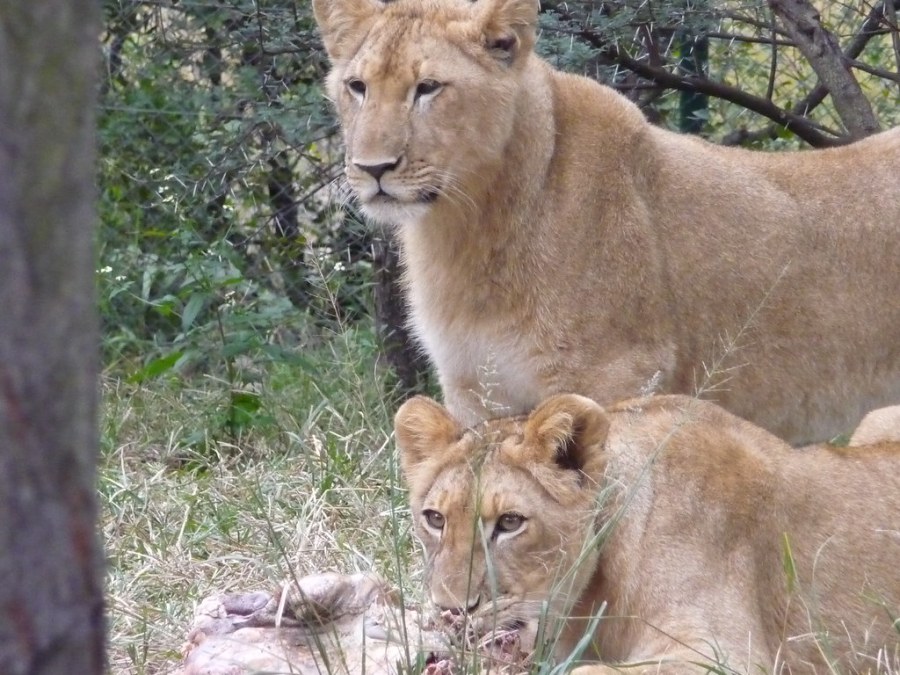
Carnivores are organisms that require meat to obtain energy. Oft, carnivores feed on herbivores. An case of this is a cat that eats a mouse for food. Other examples of carnivores include:
- Dogs
- Lions
- Wolves
- Coyotes
Omnivores are consumers that depend on both plants and meat to sustain life. Humans fall within this category on the food chain. This is due to their power to obtain energy from foods, such as fruits and vegetables, while requiring other nutrients such every bit fe and protein provided by animals. Some other examples of omnivores include:
- Bears
- Lizards
- Turtles
- Bats
- Skunks
- Raccoons
Detritivores
Detritivores depend on organic waste material produced by other living organisms to sustain their life. This affair can include the decomposed matter from dead copse, plants, or animals. This type of heterotroph includes living organisms such as:
- Raccoons
- Lobster
- Crabs
- Vultures
Ii Forms of Heterotrophs
To empathize heterotrophs further, scientists take broken herbivores, carnivores, and omnivores upwardly into two split classifications. These include chemoheterotrophs and photoheterotrophs.
A chemoheterotroph requires free energy and carbon that is provided past other living organisms. Phototrophs apply light from the sun to give them energy but must still consume other living organisms to provide them with carbon.

Source: https://www.reference.com/science/organism-cannot-make-its-own-food-called-cf1454bdf2b0fab3?utm_content=params%3Ao%3D740005%26ad%3DdirN%26qo%3DserpIndex
Posted by: romeextrahmethe.blogspot.com
0 Response to "How To Use Cash Register Fast Food Restaurant"
Post a Comment