

This VPN service uses cryptocurrency to make browsing the internet safer — here’s how | Laptop Mag
This VPN service uses cryptocurrency to make browsing the internet safer — hither'due south how

A virtual private network's (VPN) primary priority is to proceed your data subconscious. Giving y'all access to content around the globe is a fantastic perk, and if information technology can heave your cyberspace speeds, all the meliorate. Regardless, the best VPN services today do everything they tin can to make sure y'all stay anonymous online.
One way these services reassure customers their data is safe is by emphasizing their no-logs policy. This means your VPN provider's centralized servers don't collect or keep a digit of data. Or, so these services claim.
More often than not, general VPN users trust their chosen provider because they simply state they have "no logs." Unless you go out of your way to run across these servers yourself, let alone understand what in the earth to search for, information technology'south hard to prove that claim. It all whittles downwardly to this: How practise you trust a VPN service?

To get a better idea of how this all works, I spoke to co-founder and CEO of Exidio — the evolution arm of VPN service Lookout man — Dan Edlebeck. Equally information technology turns out, a decentralized VPN (dVPN) is exactly what privacy-conscious VPN users need to prove their information isn't being logged. In fact, information technology tin even offer cryptocurrency in commutation.
What is a dVPN?
When I asked Edlebeck this question, I must have looked like I did after watching Christopher Nolan's Tenet for the first (and second) fourth dimension; mazed and confused. In truth, it isn't hard to wrap your caput around, simply I'm even so happy he put information technology in layman'due south terms.
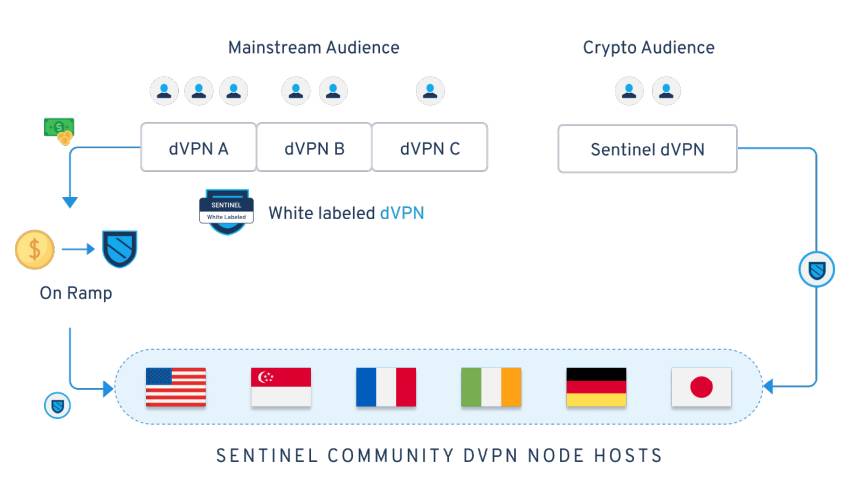
"A decentralized VPN (dVPN) is a peer-to-peer network for people to offer and connect to a bandwidth network," Edlbeck said. "Anyone can offering their excess bandwidth from their home or from a data eye, and people can too route their traffic through that excess bandwidth."
Equally he puts it, a dVPN is a marketplace where people can offering a decentralized bandwidth via a peer-to-peer network. Information technology'due south all managed by whoever wants to opt-in.
"The benefit of using a VPN is actually the same as using a centralized VPN or a decentralized VPN. Y'all're using both for the same use cases, only in a decentralized architecture, it'due south individuals that are offering the nodes on the network." Exidio, or any other company for that matter, has no way of accessing the traffic. Those who host the node tin can't view a user's private information or metadata, either.

1 of the all-time reasons to use a dVPN is the number of IP addresses from all over the world from different people routing them through their own dwelling house internet service provider. Edlebeck offers an case of this: "Even when people employ a VPN, they're trying to go access to content and they can't considering the IP accost that they're using on their VPN has been blacklisted from some site every bit identified equally VPN. With a dVPN, y'all have a global network of IP addresses and they're not all coming from sure data centres that have been identified every bit a VPN."
More than importantly, a dVPN is open source. This ways users are able to evidence web traffic and metadata are end-to-finish encrypted. However, you'll notice that the all-time VPN services only use centralized systems. Naturally, this begs the question...
Can nosotros trust VPN services?
When it comes down to it, no. All the same, that respond comes with a huge asterix, which Edlebeck breaks down.
When using a VPN, especially at a high level, one of its main use cases is protecting your traffic, data and personal data. Another is accessing cyberspace content you wouldn't otherwise see due to geo-restrictions (a.k.a geo-blocks). This is important. Every bit Edlebeck points out, certain net service providers can log your metadata and resell information technology to other parties for their own benefit. It's nasty business, but business organization all the aforementioned.
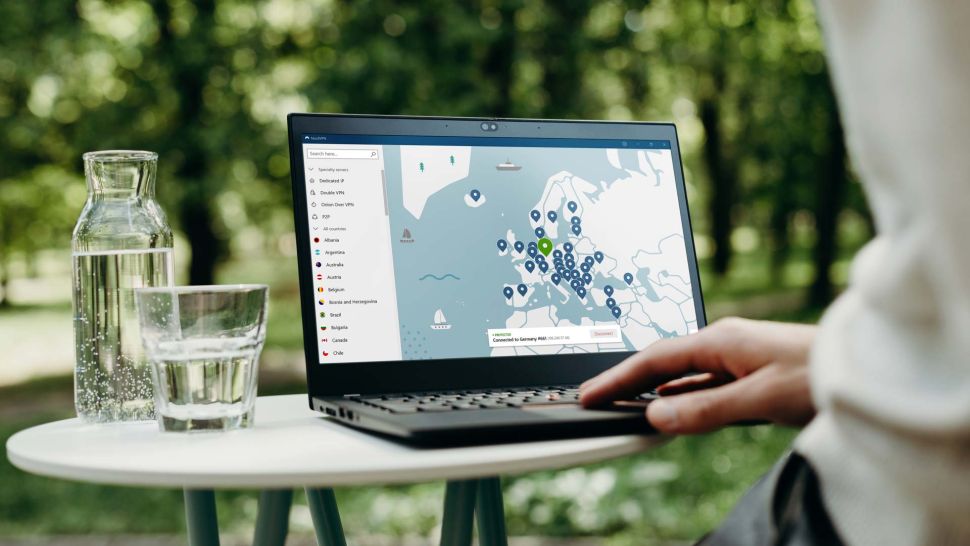
That'south when a VPN comes in handy...correct? While many VPN companies claim they're not logging user information, these companies aren't open-source. This means they can't prove the "no-logging" guarantee — which you'll oft find on VPN service websites — is taking place. Users are taking the visitor'due south word for information technology.
To help with these claims, companies will have tertiary-party audits so they can validate and assure users there is no logging taking place. ExpressVPN recently used auditing firm PricewaterhouseCoopers (PwC) to ostend the VPN service's privacy protection, while NordVPN also used PwC to evaluate its no-logs claims. These are two of the biggest VPN providers, then information technology would be bizarre if they didn't both ace their evaluations.
However, as Edlebeck points out, "NordVPN, one of the biggest VPN companies in the globe, had a data alienation in 2022 proving [it was] logging user data." NordVPN addressed the breach to let users and potential customers alike know its network is still safe to use — emphasizing "the afflicted server did non contain any user activity logs."
PwC is one of the biggest auditing firms in the earth, and is well regarded as a trustworthy company — its slogan is "to build trust in society and solve important bug." Gaining assurance from PwC is a good sign for NordVPN, only it takes more just a guarantee to gain trust. The WhatsApp privacy changes earlier in 2022 are a attestation to that.
This is how dVPN services such as Sentinel differ. "There is no i visitor that tin can really track and log your data," Edlebeck explains. "The front end-facing applications (i.e. browser extensions, Android apps) that you're using to connect to the Sentinel network are open source, so you lot can review the lawmaking base and testify that they are terminate-to-terminate encrypted."
What is Sentinel?
As Edlebeck states, Sentinel is a dVPN peer-to-peer network where anyone tin can offer and host their bandwidth. Exidio is ane of the software development companies building on the Sentinel network, which too works on the application and its user interface.
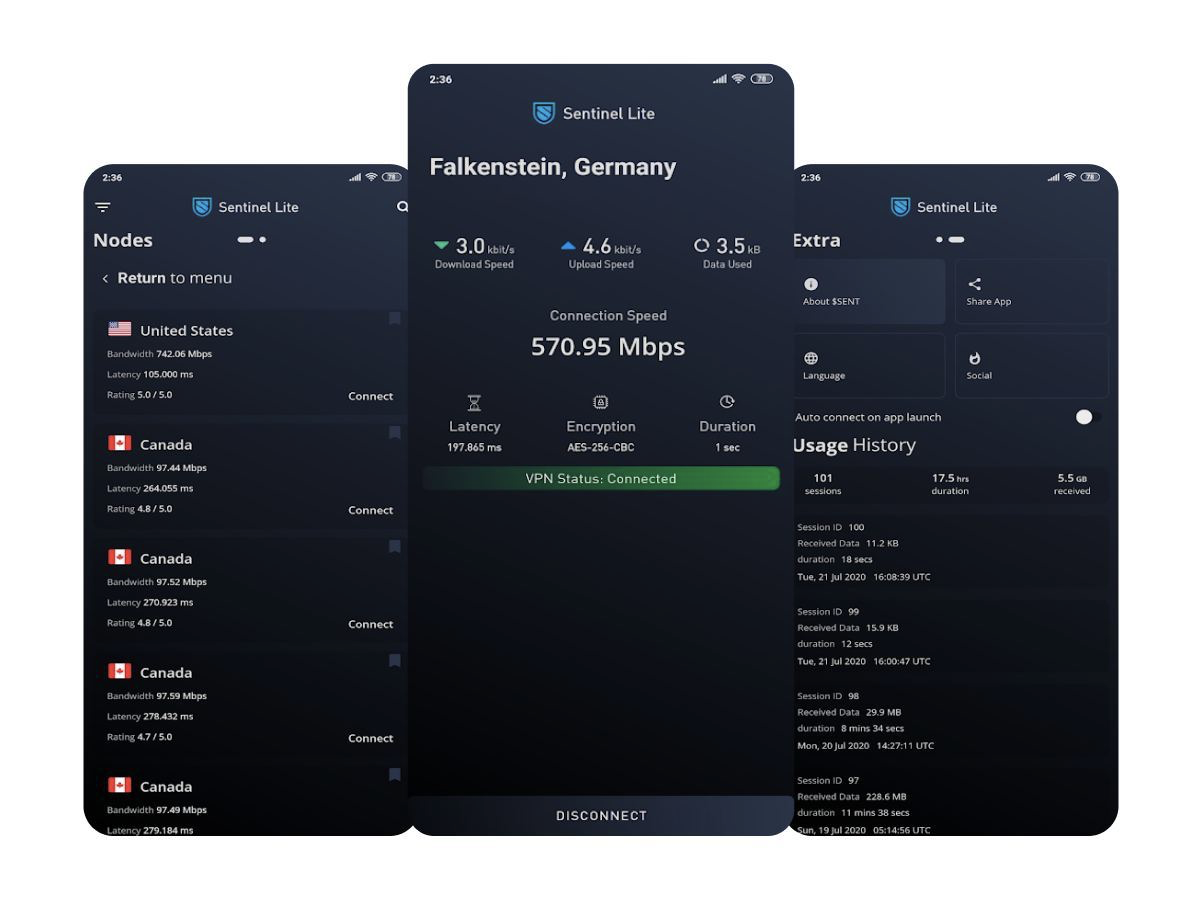
So, while the Sentinel decentralized VPN app is now available on Android via the Google Play Shop, this is but the beginning of something much bigger. "Lookout isn't ane front end-facing application. Sentinel is a framework for any company or individual that either already exists as a VPN company or an entrepreneur that wants to offset their own awarding to connect to."
Exidio is looking to build on its framework to reach the global VPN market. If VPN services really desire to prove they are end-to-cease encrypted, and non have to rely on their own infrastructure and architecture to offset their own visitor, they could build information technology on top of the Sentinel network. The more people that join the decentralized network, the more bandwidth available. With bandwidth comes faster cyberspace speed, which is e'er a plus with any VPN service.
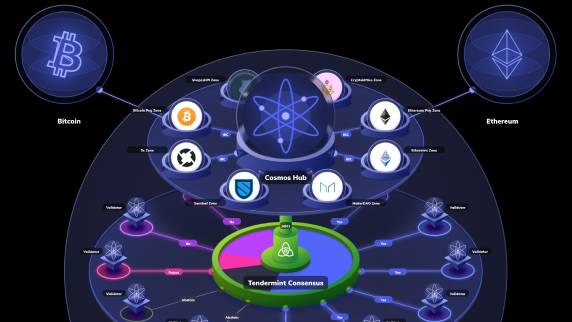
However, how do you make certain users will offer their bandwidth? Well, cryptocurrency is a nice incentive. Edlebeck explains the biggest opportunity to scale the number of people that are offer bandwidth to the network is through monetization. "So, there'south kind of 2 sets of nodes. There are the validator nodes validating the blockchain, and this is pretty common within the crypto industry to secure a blockchain specially inside Cosmos. But then, you know, there's the people offering their bandwidth, the decentralized VPN nodes."
Getting paid to offer bandwidth is a fantastic monetization plan, peculiarly for those familiar with peer-to-peer networks. However, Sentinel currently isn't monetized yet. Edlebeck explains at that place is nevertheless some work to be done, although in that location have been "examination nets" with "incentivized periods of time" to build the network.
Even better, he connected to say the network will exist monetized over the next couple of months. This could bring about a whole new style of using VPN services, particularly knowing you lot can check to see if your data while surfing the web is encrypted.
Is the global VPN market big enough to sustain such a monetized network?
According to Edlebeck, the VPN industry is bigger than e'er before. Instead of it originally being an esoteric thought — something just a few people interested in networking would use — VPN services take turned into a "mass consumer adopted product." He's right.

In 2022, the VPN market was valued at around $15 billion, which quickly rose to a $thirty billion dollar industry in 2022, co-ordinate to the Exidio CEO. By 2027, information technology's expected to be a $107 billion industry, which is a lot more than than reported estimates in 2022. "information technology's growing at a rapid charge per unit, and COVID has only been an extreme accelerant that, as people move online and are used to more remote work, they're looking for secure connections."
There are many places in the world that at present employ VPNs out of necessity so they tin can simply go access to content. For case, trending audio-simply app Clubhouse has recently been banned in Oman (via Aljazeera), but a VPN tin featherbed those restrictions.
While accessing different shows on streaming services similar Netflix plays a major part in VPN services becoming a consumer production, Edlebeck mentions there'south another side to it all. "In that location'due south more extreme and interesting uses similar activists looking to exist able to share data in real-time, maybe in a disharmonize zone. With their internet restricted or content restricted they'll utilize VPN to be able to share information."
Outlook
Decentralized VPNs offering a whole new way for VPNs to exist used. Eventually, those who adopt information technology and host nodes tin can go paid through cryptocurrency for offering their excess bandwidth to others. What's more than, thanks to Exidio, in that location's even a mode to natively integrate the dVPN framework into existing applications — if these other services are looking for a way to truly merits they have a no-logs policy.
Despite this, volition a more consumer-focused VPN market bother to look up "no-logs" themselves? For those who simply desire to picket all the anime they can handle on Netflix in Japan, probably not. Yet, for the loftier-level VPN users, forth with those who might be stuck in heavily censored countries, a dVPN could 1 day exist your best option.

Source: https://www.laptopmag.com/features/this-vpn-service-uses-cryptocurrency-to-make-browsing-the-internet-safer-heres-how
Posted by: romeextrahmethe.blogspot.com
0 Response to "This VPN service uses cryptocurrency to make browsing the internet safer — here’s how | Laptop Mag"
Post a Comment